
Speech & OT at
Ally Behavior
All the services they need,
all in one place.

Speech & OT at
Ally Behavior
All the services they need,
all in one place.
PERSON
CENTERED

At Ally Behavior Centers, your child receives more than just individualized ABA therapy. We also provide on-site speech therapy, occupational therapy, and feeding therapy — making it easier than ever to access the full range of developmental support your child may need, all under one roof
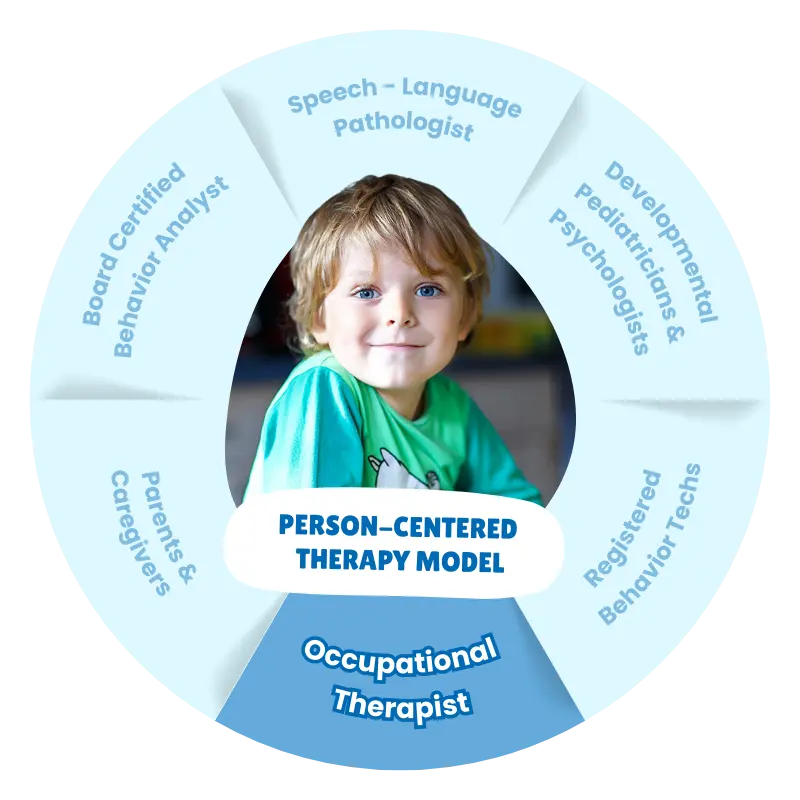
Our collaborative care model means your child’s ABA therapy team works side-by-side with their Speech and Occupational Therapists. These allied health professionals specialize in early developmental milestones and meet weekly with your child’s BCBA to review all of your child’s individual goals and celebrate progress together. All clinicians working with your child are trained to support individualized speech and occupational therapy goals throughout the day, not just during sessions.
Our Speech Language Pathologists and Occupational Therapists will frequently join your parent training sessions. This means you'll benefit from the full care team in a single meeting, so you won’t have to juggle multiple appointments.
Whether we’re helping your child improve communication, fine motor skills, or eating habits, every member of our team is aligned on your family’s goals. This well-rounded, team-based approach supports lifelong success and helps children build the skills they need for kindergarten and beyond.
With a Speech Language Pathologist at every location, speech therapy is available to all children at Ally Behavior Centers. Integrating speech therapy into your child's program at Ally Behavior Centers can help with improving social skills, addressing communication delays, and more!
Occupational therapy (OT) services are available in combination with your child's ABA therapy services. Ally Behavior OT is available at all center locations to help your child overcome difficulties with fine and gross motor skills, sensory processing concerns, feeding delays, and more!
SPEECH
THERAPY
Speech therapy helps children on the autism spectrum build the communication skills they need to express themselves. The individualized goals set by our Speech Language Pathologists (SLPs) aid your child in connecting with others, advocating for themselves, and succeeding in future school settings. No matter your child’s level of communication, speech therapy can be a valuable addition to their care program.
Have you noticed that your child struggles with delayed speech, difficulty understanding language, or trouble with facial muscle movement? Speech therapy can help address these individual learning opportunities.


Some regular goals our Ally Behavior speech therapy teams focus on include:
- Building vocabulary and using words to express needs and feelings
- Improving understanding of instructions and everyday language
- Developing social communication skills, (e.g., greetings, turn taking)
- Enhancing nonverbal communication (e.g., gestures, eye contact, facial movement)
- Practicing pronunciation and articulating sounds
- Using alternative methods of communication, such as AAC (Augmentative
and Alternative Communication) devices and picture boards - Addressing swallowing / feeding difficulties by working on safe eating and drinking skills
Our SLPs work closely with the rest of your child’s care team. Together, they create a unified plan that targets your child’s individualized speech goals throughout the week. For example, your child’s SLP may recommend specific language targets for BCBAs to reinforce during ABA sessions, such as practicing simple requests or social greetings. This teamwork ensures your child receives consistent support that builds on progress across all areas.
Additionally, as your child prepares to transition to kindergarten, our SLPs collaborate with you to advocate for your child’s speech needs. They may also consult on the creation of your child’s Individualized Education Program (IEP) to set communication goals, recommend tools, and ensure a smooth school transition.
At Ally Behavior, we firmly believe that collaboration between your child’s therapy providers is the key to a foundation for lifelong success. If you’re having concerns about your child’s speech development, we’re here to help. Take the first step today!
OCCUPATIONAL
THERAPY
Occupational therapy helps children with autism build the everyday life skills they need to become independent and care for themselves. Our occupational therapists (OTs) focus on a wide array of day-to-day self-care tasks such as completing morning routines and feeding. Ally Behavior OTs are also specialized in developing fine motor skills (small, precise movements) and gross motor skills (larger muscle movements)
Beyond activities of daily living and movement, occupational therapy is a great resource if you notice your child struggles with sensory processing. Some children with autism may experience intense stress when exposed to bright lights, loud noises, or certain textures. Other children may have an unusually absent reaction to these physical sensations. Occupational therapy is a resource for understanding your child’s sensory needs and providing them with necessary coping skills.
Some common skills our Ally Behavior occupational therapy teams focus on include:
- Improving hand-eye coordination
- Training hand muscles and grip strength
- Learning how to get dressed each morning
- Managing personal hygiene (e.g., toothbrushing, handwashing, hairbrushing)
- Sensory regulation and processing sensory information
- Practicing handwriting and pencil grasp
- Independent eating habits and expanding diet
- Becoming comfortable with bathroom use
- Improving gross motor skills
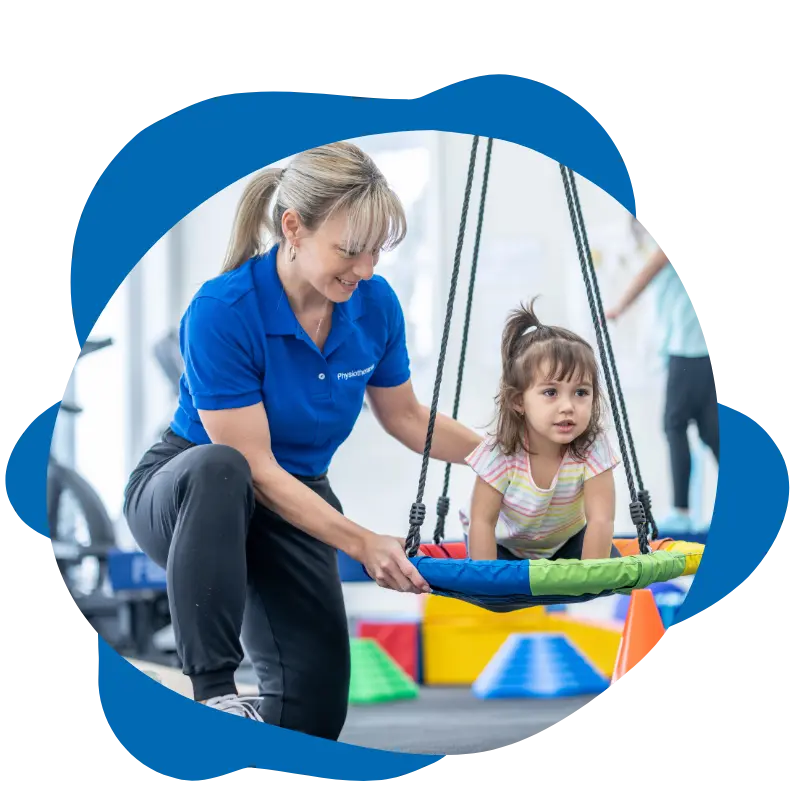
Our occupational therapists work closely with your child’s ABA therapy team. They meet regularly to coordinate your child's individual goals and share progress. For example, an OT might suggest activities that encourage fine motor development that your child’s BCBA can integrate into their program. This collaborative framework is “the Ally Difference” — our commitment to making sure all the support your child needs is available under one roof and aligned with your families goals.
FEEDING
THERAPY

Is your child sensitive to certain food textures, smells, or tastes? Do they have a limited diet or struggle to try unfamiliar foods? You’re not alone - these barriers are common in children with autism, and feeding therapy can help.
At Ally Behavior Centers, feeding therapy is designed to assist early learners in becoming more comfortable with mealtime routines. Whether your child struggles with trying new foods or needs assistance strengthening chewing and swallowing skills, our team is here to help.
Depending on the nature of your child’s specific needs, feeding therapy would occur during occupational therapy or speech therapy sessions. Our centers include dedicated spaces for practicing mealtime routines in a structured, school-like setting.
Each session is tailored to be low-pressure and empowering. Our focus is on helping your child feel safe, confident, and in control during mealtime. Paired with this, our OTs and SLPs will also work to educate you as the caregiver on how to best support your child’s eating habits.
At Ally Behavior, we also understand the personal and cultural importance of feeding. That’s why we work with our families to understand what kinds of foods are commonly eaten at home and how to integrate important dishes into your child’s therapy.
Together, we’ll help your child build a healthier, happier relationship with food. Take the first step today!
Examples of feeding therapy goals might include:
- Exploring new foods through sensory exploration (smelling, touching, etc.)
- Practicing oral-motor exercises to improve chewing and swallowing
- Developing self-feeding skills
- Reducing anxiety surrounding meal time through positive reinforcement and routine
- Building tolerance to new textures, temperatures, and smells
You complete the form, we do the rest.
Using the insurance card you upload
A scheduling link is sent to your email