
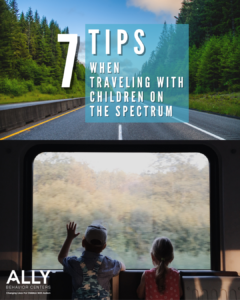
Traveling with a young child with ASD this holiday season
Here are 7 tips to consider
Road trips, planes, bus rides, and more—traveling can look many different ways. When we’re planning a trip, there are so many things to check off the list; from packing bags, creating an itinerary, and even reaching out to friends and family at your destination. We look forward to going on trips and the excitement that comes with counting the days until departure; however, it can be a bit overwhelming, especially for families who have young children on the autism spectrum. With proper planning, your trip can go considerably more smoothly. Children with autism may experience challenges related to communication, routine changes, or
sensory processing differences,
which can make travel more demanding. Here are 7 travel tips for a child with autism to consider when preparing to go on your next adventure with family or friends.
7 Travel Tips
- Create a social story in advance –
Consider creating a social story that will help tell what the trip will be like. Use pictures and words with descriptions of the process or any sensory experiences your child may encounter. The more detail the better. Review this story often leading up to your trip. Social stories are a great way to introduce or prepare for any upcoming activity and are commonly used in
early intervention autism therapy
to build predictability and comfort.
- Set a schedule –
Most know that individuals with ASD love to stick to a schedule, and deviating from that schedule can cause stress. Try to stay within the parameters of a normal eating, napping, and activity schedule when traveling. Timers or a written out itinerary can help with this, just as consistent routines are emphasized in
center-based ABA programs.
- Mark it on the Calendar –
Visuals are almost always helpful and you can countdown to the big day. This can even be paired with your social story! With your child and a marker, X out the days until your trip together. This will build up and maintain the excitement for you and your child until the big day arrives.
- Pre-pack meals and snacks –
Once you get to the airport or head out on the road, you may not have the same food available from home. If you happen to have a picky eater, it’s probably a good idea to pre-pack a few of your child’s favorite meals or snacks for the trip. Planning ahead is especially helpful for children receiving
ABA, speech, or occupational therapy,
where consistency can support regulation. Also, look at what’s around your destination and make sure there will be food options available that your child will tolerate. You can always use
https://maps.google.com
to search restaurants and attractions in any area beforehand.
- Offer choices –
Many children have difficulty relaxing and enjoying a break from the go-go-go lifestyle like us adults. Make sure you have a few of your child’s favorite things available, to keep them occupied. Favorite book(s), iPad, toys, or other comfort items are just a few ideas. This will definitely come in handy if you have a long road trip or layovers at the airport.
- Prepare for sensory concerns –
Are you heading to the airport with a child who doesn’t like loud noises? Consider buying some headphones for the trip, and make sure you test them out at home first. Are you afraid your child may panic at the possibility of their ears popping? Consider packing some chewing gum or possibly over-the-counter medicine for the discomfort. Thinking through these things ahead of time will benefit you in the long run, especially if your child has known
sensory sensitivities.
- Exercise before departure –
Traveling often equals sitting for long periods—whether it’s at the airport, on the plane, in the car, or on the bus. It’s best to try and get the “wiggles” out beforehand. 15 to 20 minutes of running, jumping, or any exercise to get the heart rate up should aid in calming your child down, and ultimately help them stay still for longer periods. These regulation strategies are frequently incorporated into
structured ABA therapy environments.
Try not to worry about what other people think—it’s helping your child succeed.
Summary
Although it may seem like a burden to even think about planning a trip, not knowing how your young child will react and other uncertainties, practicing these strategies will help not only your child but you as well. It’s all trial and error at the end of the day. One strategy may work for some children but not yours, or vice versa. Over time you will learn the best approach to take for your child. Supporting adaptability and coping skills—often goals addressed in
early intervention ABA therapy—can make experiences like travel more manageable. Hopefully, these 7 travel tips for a child with autism serve as a guide to help your next trip run as smoothly as possible.